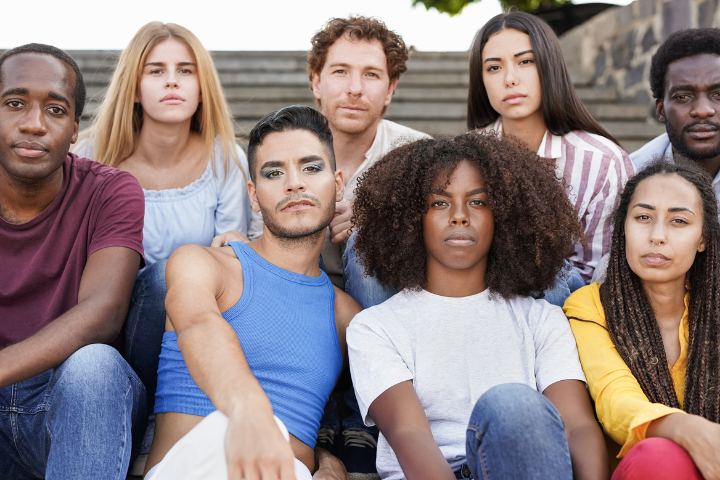
We are often told that sharing our mental health struggles with others can help us heal and feel less alone. But what happens when we are met with dismissive, minimizing or invalidating comments or we find there are a lack of resources that represent our situation? What happens when others don’t believe us because we don’t fit the stereotype?
Eating disorders do not discriminate and they do not have a ‘look’. Despite this eating disorder truth, misconceptions about who is affected by eating disorders are plentiful and harmful. They exist within individual and community discourse, as well as in the healthcare environment, which can impact the diagnoses, support options and access to treatment for those who don’t fit the stereotype.
As an eating disorder Foundation, it’s important for us to speak up against stereotypes to ensure that support is available for people of all different lived experiences and backgrounds.
It is encouraging to see the media acknowledge and start to shed light on this important topic. We encourage you to read CBC’s recent news feature highlighting how the common depictions of people with eating disorders can have serious consequences for those who don’t fit the stereotype.
“Eating disorders don’t discriminate. You can’t always tell someone has an eating disorder just by looking at them. [The] education piece is really important so that people know that no matter what size I am, no matter what colour I am, no matter what my life experiences, if I’m struggling with an eating disorder, I deserve care, I deserve support just as much as anyone else.” – Sophia Khan, Registered Dietitian, Distorted View, CBC article
Read the full CBC article here.
 “The CBC article by Lypny points to a mental and physical health literacy crisis in our society. By failing to account for a range of body types, and body idealizations, our clinicians are left with inadequate diagnostic tools, and many individuals who are suffering don’t have the knowledge or support to identify their disorder and seek treatment. I struggled for years to identify my own disordered eating because the resources I sought out didn’t reflect my experience as a male. I knew something was wrong, but I couldn’t put a name on it; I convinced myself that my problem wasn’t worthy of professional attention.
  “
“