Welcome to the blog space of the Looking Glass community, where we post our own and others’ reflections and perspectives on eating disorder issues, journeys of recovery, and other helpful tips and tools.
Breaking Stigma Needs To Lead To Breaking Barriers
We do need to change the way we think about eating disorders, but more importantly we need to change how we actually go about fighting and eradicating this disease. So let’s break stigma, and then break barriers – barriers to accessing effective treatment, barriers around government inaction, barriers to insurance coverage..the list goes on.
In her hopeful and inspiring Mother's Day poem about recovery, guest blogger Grace Davies reminds us to relish in all of the important steps we've taken along the way, and that true recovery is possible for all of us: "There are many of us who walked the path before you and we will guide the way. / Keep going, keep dreaming and most importantly: keep living."
To be in our bodies is a beautiful feeling. Experiencing the multiple layers of ourselves using the information our bodies provide is a wonderful way to form a deeper connection to ourselves and the world around us. I truly believe health is a mind-body connection and as we feel into the ways our bodies communicate with us, we are able to make choices that honour our unique needs. This experience is called the feeling of "embodiment."
Every story of recovery is as unique as the person it belongs to ... For me, I had to experience the process of un-learning before I could really begin to understand myself. When the #metoo movement began to take hold in 2016, I began to reflect deeply on the problem of misogyny in the context of my eating disorder.
Q: I know a few people who have recovered and they keep trying to tell me how it needs to be done. I don’t want to be rude but I am tired of being told how my recovery needs to look. It is made more difficult because these people have actually been through it. How do I set boundaries in a way that doesn’t ruin the friendship?
As someone who has had an eating disorder, I know what it’s like to wake every day facing an internal battle. Throughout my recovery, I had many relapses. Early on, I would always tell myself: “this is the last time,” and I wouldn’t tell anyone what I was going through. I didn’t think anyone would understand, and I was afraid of being judged.
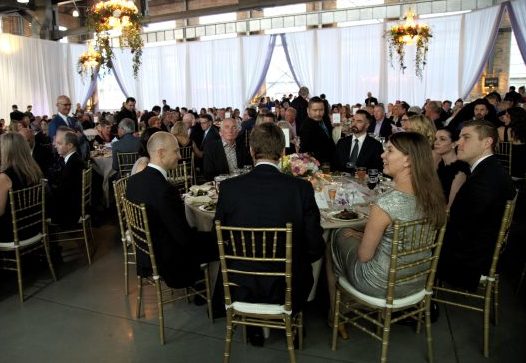
On Friday April 6th, we hosted our 14th Annual Fundraising Gala — and what a beautiful, love-fuelled night it was! Over 300 guests joined us at the Rocky Mountaineer Station for this year's event, whose hopeful theme was All You Need Is Love.
Q: I feel really adamant about not letting my family doctor know about my eating disorder but my family has basically given me an ultimatum that either I have to tell him or they will because they feel my health is at risk. I am not sure what to do.
It's been nearly ten years since I recovered from my past eating disorder.
This fact hit me the other day and I must admit, it made me very proud of myself. Proud of the work I did in that time of my life to better my future. It's strange; I feel so far removed from that part of my life, and feel like I am a completely different person looking back on that experience. My life is far beyond what I imagined was possible when I was 18, and my past self would be amazed at where I am today; not because of anything specific I've done that has been truly incredible, more so that I'm a functioning, independent adult who enjoys life and has ambitions. Yet that time of my life was a huge part of my developmental years and it would be unreasonable to completely dismiss it, as it is a part of my identity.
Self-Love has been a major buzz topic that has come up over the past few years. The fact that there is so much attention being paid to this term signals that people are very interested in, and intrigued by, the idea of loving… ourselves?
Looking Glass Foundation respectfully acknowledges that our work takes place on the unceded traditional territories of the xʷməθkʷəy̓əm (Musqueam), Sḵwx̱wú7mesh (Squamish), and səlilwətaɬ (Tsleil-Waututh) Nations.
For resources and information
about eating disorders contact the Looking Glass Foundation: